


 IDRhttps://dealers-indonesia.tvsmotor.com/tvs-motor/cirebon/pekalipan/tvs-cirebon-in-pekalipan-cirebon--3NCkla/articles/petrol-or-electric-scooter-in-2026-a-practical-gui--d9b10267-d9cc-424f-933d-f976543dbe97
TVS Cirebon
Two Wheeler Showroom in Pekalipan, Cirebon, West Java
Pulasaren, Jl. Lawanggada No 1, Pekalipan, cirebon, west java - 45116
Temukan dealer resmi Pekalipan, Cirebon
TVS Cirebon Social Feeds in Pekalipan, cirebon
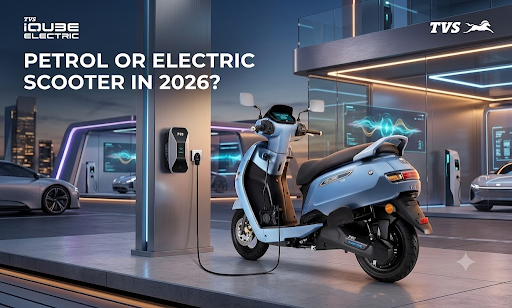
Petrol or Electric Scooter in 2026? A Practical Guide for Everyday Pekalipan Riding
If you ride to work every day in Pekalipan, Cirebon, you have probably had this exact debate in your head: stick with a familiar petrol scooter, or switch to electric? In 2026 the choice is closer than ever, and the honest answer depends on your daily distance, your budget and how you charge or refuel.
This guide skips the hype and walks through the real petrol vs electric scooter trade-offs so you can decide what actually fits your commute.
Why More Riders Are Comparing Petrol and Electric Scooters
A few years ago, electric scooters felt experimental. Today they are a mainstream option with better range, faster charging and lower running costs. At the same time, petrol scooters remain proven, easy to refuel and reliable across long distances.
So the question is no longer "is electric ready?" It is "which one is right for me?" That is a much more useful comparison, and it is the one we will make here.
How Petrol and Electric Scooters Differ
The core difference is what powers the wheels.
Petrol scooters burn fuel in a small engine. You refuel in minutes at any pump and enjoy long range, but you deal with fuel costs, engine servicing and emissions.
Electric scooters run on a battery and motor. You charge at home or work, enjoy silent, instant acceleration and lower running costs, but you plan around charging and range.
Neither is simply better. They suit different routines.
Daily Running and Charging Considerations
This is where your lifestyle decides a lot.
A petrol scooter wins if you cannot charge easily or if you often ride long, unplanned distances. A quick stop at a pump and you are gone.
An electric scooter wins if you have a reliable place to charge overnight. Take the TVS iQube S as an example: it uses a 3.5 kWh battery, offers a real-world range of around 115 km and can charge from 0 to 80% in about 3 hours using its portable charger. If your daily ride is 30 km, that is roughly three days of riding on a single charge. For most city commuters, that removes range anxiety entirely.
Maintenance and Ownership
Here electric scooters have a structural advantage. Fewer moving parts means fewer things to service. There is no engine oil to change, no spark plugs and no exhaust system.
Petrol scooters need regular servicing, oil changes and periodic part replacement. None of this is dramatic, but it adds up over the years. If low upkeep is a priority, electric is appealing. If you value the simplicity of a proven petrol network and quick roadside fixes anywhere, petrol still makes sense.
Performance for City Riding
For city commuting, electric scooters feel surprisingly good. The motor delivers instant torque from a standstill, which is perfect for stop-and-go traffic and quick getaways at lights. The iQube S, for instance, reaches a top speed of 80 km/h and sprints from 0 to 40 km/h in 4.2 seconds, with no gear changes and no noise.
Petrol scooters are also strong in the city and give you that familiar feel and sound many riders love. But in dense traffic, the smooth, silent pull of an electric scooter is hard to beat.
What About Range and Daily Travel Distance?
Range is the deciding factor for many riders. Ask yourself one question: how far do I ride in a day?
Under 40 km a day: an electric scooter easily covers this on one charge.
40 to 80 km a day: still manageable with electric, with planned charging.
Long, unpredictable distances: petrol offers the freedom of instant refuelling.
Be honest about your real routine, not your occasional long trip. Most Cirebon commuters ride far less each day than they think.
Which Type Suits Different Riders?
Petrol or Electric: A Practical Decision Checklist
Measure your true daily distance for a week.
Check whether you can charge at home or work.
Compare running costs (fuel vs electricity).
Factor in maintenance effort over a few years.
Test ride both to feel the difference.
FAQs on Petrol vs Electric Scooters
Q: Is an electric scooter better than petrol for daily city commuting? For fixed city commutes with home charging, electric is often cheaper to run, lower maintenance and smooth in traffic. For long unplanned distances, petrol still offers quick refuelling.
Q: How far can an electric scooter go on one charge? It varies by model. The TVS iQube S offers a real-world range of about 115 km, which covers several days of typical city riding.
Q: Do electric scooters need less maintenance? Yes. With no engine oil, spark plugs or exhaust, electric scooters generally need less routine servicing than petrol scooters.
Q: Are electric scooters good in traffic? Very good. Instant torque and no gear shifts make them smooth and responsive in stop-and-go city traffic.
Final Thoughts
The petrol vs electric scooter decision in Pekalipan, Cirebon comes down to your routine. If you have a steady city commute and can charge conveniently, an electric scooter can save you money and effort while giving you a smooth, quiet ride. If you cover long or unpredictable distances, petrol still offers unmatched refuelling freedom.
If you are leaning electric, the TVS iQube S is worth a closer look for its balance of range, charging speed and everyday practicality. Visit an authorised TVS Motor Indonesia dealer for a test ride and see which scooter fits your day.