


 IDRhttps://dealers-indonesia.tvsmotor.com/tvs-motor/maros/mandai/tvs-maros-in-mandai-maros--48rDkn/articles/motorcycle-running-costs-explained-fuel-maintenanc--80feb336-6f2f-46bf-83da-a29443330507
TVS Maros
Two Wheeler Showroom in Mandai, Maros, South Sulawesi
Ruko No 7, Batangase, Jl. Poros Makassar-Maros KM 22, Mandai, maros, south sulawesi - 90552
Temukan dealer resmi Mandai, Maros
TVS Maros Social Feeds in Mandai, maros
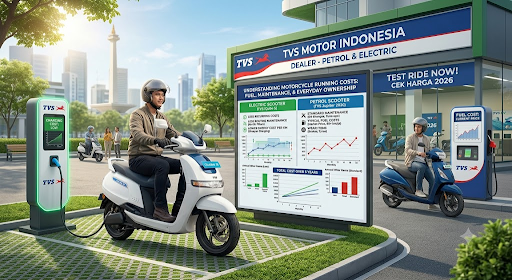
Motorcycle Running Costs Explained: Fuel, Maintenance and Everyday Ownership in Mandai
The sticker price of a motorcycle is only the beginning. What really matters for most riders in Mandai, Maros is a simpler question: can I comfortably afford to run it every month? Understanding your motorcycle running cost before you buy helps you choose a bike that fits your budget for years, not just on day one.
Let us break down where the money actually goes and how to estimate it.
What Makes Up the Cost of Owning a Motorcycle?
Your total motorcycle ownership cost is more than fuel. It includes several recurring parts:
Fuel or charging
Regular maintenance and servicing
Wear items like tyres and brakes
Insurance and registration
Occasional repairs
When you add these up, you get the real monthly cost of ownership. The good news is that most of these are predictable, so you can plan for them.
Fuel or Charging Costs
For most riders, fuel is the biggest ongoing expense. Your motorcycle fuel cost depends on how far you ride and how efficient your bike is. A fuel-efficient commuter keeps this low, while a bigger engine costs more per kilometre.
This is where electric changes the picture. An electric scooter like the TVS iQube S replaces fuel with a small charging cost. With a real-world range of around 115 km per charge, it can cover several days of city riding on very little electricity, which is why electric ownership is often far cheaper to run day to day.
Regular Maintenance
Every motorcycle needs regular maintenance: oil changes, filter checks, chain care and periodic servicing. Petrol motorcycles have more service items because of the engine, while electric scooters have fewer moving parts and generally need less routine work.
Sticking to your service schedule actually lowers long-term costs, because small issues get caught early. Following TVS Indonesia's recommended maintenance intervals and using genuine parts keeps your bike reliable and protects its value.
Tyres, Brakes and Other Wear Items
Some parts wear out with use no matter what. Tyres, brake pads, the chain and the battery are the main ones. How quickly they wear depends on your riding style, distance and road conditions. Budgeting a little each month for these wear items means they never come as a nasty surprise.
Insurance and Registration Considerations
Insurance and registration are recurring costs that vary by model, engine size and location. Larger, more powerful motorcycles usually cost more to insure than small commuters. Factor these into your monthly maths, since they are unavoidable parts of legal, protected ownership.
How Riding Habits Affect Running Costs
Your habits have a big impact on your commuter bike running cost:
Smooth, steady riding uses less fuel or charge than aggressive acceleration
Correct tyre pressure improves efficiency and tyre life
Regular servicing prevents costly repairs
Gentle braking extends brake and tyre life
Two riders on the same bike can have very different running costs, purely because of how they ride and maintain it.
How Different Motorcycle Types Can Have Different Ownership Costs
Not all motorcycles cost the same to run:
Small commuter scooters and mopeds (like the TVS XL 100 or Neo XR): typically the cheapest to run, with low fuel use and simple maintenance
Larger sport or retro motorcycles (like the TVS Ronin): more power and features, usually higher fuel and insurance costs
Electric scooters (like the TVS iQube S): low charging and maintenance costs, though you plan around charging
Matching the type to your budget is the key to comfortable ownership.
A Simple Monthly Motorcycle Cost Calculation
You can estimate your monthly cost with a simple method:
Fuel or charging: monthly distance divided by efficiency, times fuel or electricity price
Maintenance: yearly service cost divided by 12
Wear items: rough monthly set-aside for tyres, brakes and chain
Insurance and registration: annual cost divided by 12
Add these four together and you have a realistic monthly running cost. Doing this before you buy prevents budget surprises later.
FAQs on Motorcycle Running Costs
Q: What is included in a motorcycle's running cost? Fuel or charging, regular maintenance, wear items like tyres and brakes, insurance, registration and occasional repairs.
Q: Are electric scooters cheaper to run than petrol? Generally yes. Electric scooters like the TVS iQube S have lower charging and maintenance costs, though you plan around charging.
Q: How can I reduce my motorcycle running cost? Ride smoothly, keep tyres properly inflated, service on schedule and choose a fuel-efficient or electric model suited to your distance.
Q: Which motorcycle type is cheapest to own? Small commuter scooters and mopeds are usually the most affordable to run, thanks to low fuel use and simple maintenance.
Final Thoughts
Understanding your motorcycle running cost helps you choose a bike you can comfortably afford in Mandai, Maros, not just today but every month. Once you factor in fuel or charging, maintenance, wear items and insurance, the right choice becomes much clearer.
If low running costs are a priority, explore fuel-efficient and electric options like the TVS iQube S, or affordable commuters across the TVS Motor Indonesia range, and pick a motorcycle that fits both your life and your budget.